When Reality Turns Rotten: The Farm’s Secret
The fourth episode of Tales Beyond the Tomb, titled The Farm’s Secret, abandons urban horror for the deceptive calm of rural isolation. It follows Samantha, a young woman who visits her father on a remote farm, only to discover that the land hides secrets far older and darker than she imagined. Alongside her father and a stranger named Chris, Samantha becomes entangled in a psychological trap where every act of kindness conceals a hidden motive.
At first glance, the setting feels peaceful. The golden fields sway under an orange sky, and the quiet hum of crickets lends a sense of calm. Yet this tranquility is soon suffocated by unease. The farm begins to feel less like home and more like a prison. Every corner of the farmhouse holds whispers of betrayal, and every locked door seems to guard something unspeakable.
Chris, the supposed family friend, becomes the axis around which the horror turns. His gentle manner masks a growing instability that soon erupts into violence. One of the game’s most haunting sequences unfolds when Samantha is cornered, her only escape illuminated by a flickering lantern as Chris stalks her through the barn. It is not just the fear of physical harm that grips players—it is the realization that the bonds of trust and family can be weaponized.
The gameplay reinforces this theme through alternating sequences of stillness and chaos. Players guide Samantha as she searches for clues, explores the desolate landscape, and struggles to piece together what happened on the farm. The pacing is deliberate, allowing dread to seep in slowly. Long silences, broken only by the wind or the creak of wood, create an unbearable tension. Every decision feels weighted with consequence, as though the game itself is watching, waiting for the player to falter.
Sound design becomes the heartbeat of The Farm’s Secret. The low hum of the wind outside, the echo of footsteps across dusty floors, and the faint cry of unseen animals combine to form an atmosphere thick with paranoia. The farmhouse groans under the weight of its history, turning every sound into a memory of violence. The sense of dread never leaves, even in moments of apparent calm.
As the story progresses, Samantha faces a series of moral dilemmas that blur the line between victim and perpetrator. When the truth finally surfaces, it offers no relief. The closing moments are not triumphant but suffocating. The player is left to wonder whether Samantha has escaped the farm—or merely inherited its curse.
The Farm’s Secret lingers long after the screen fades to black. It is not just a tale of horror but of guilt, survival, and the haunting persistence of memory. Beneath its chilling narrative lies a question that defines all great psychological horror: what if the real monster is not outside the door, but within us?
A Road Paved in Blood: Route 86
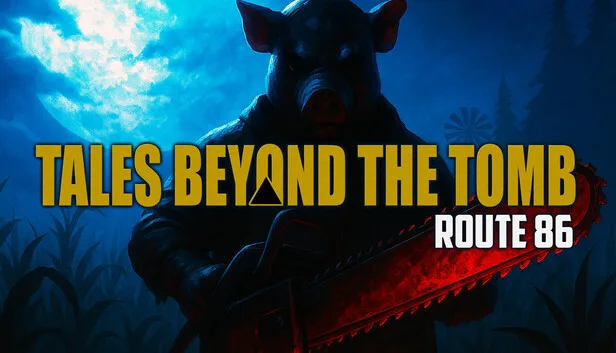
If The Farm’s Secret is a study in confinement, Route 86 is a plunge into chaos. This newest installment in Tales Beyond the Tomb exchanges the claustrophobic stillness of the countryside for the wild unpredictability of the open road. It follows five college friends embarking on what should have been an ordinary road trip across the American Midwest. The laughter, the music, and the endless highways evoke a sense of freedom but that illusion collapses when their car breaks down on an isolated stretch of Route 86.
What follows is a descent into terror. As the group seeks help, they discover that the highway is far from empty. The barren landscape hides a community of cannibalistic predators who prey on stranded travelers. The road itself becomes a hunting ground, a place where help will never come and escape is a fragile illusion.
Unlike the deliberate pacing of The Farm’s Secret, Route 86 thrives on speed and unpredictability. Players shift between the perspectives of the surviving friends, experiencing their fear firsthand as night falls and the group begins to vanish one by one. Each decision carries weight—whether to fight, to flee, or to hide. Survival feels temporary, and safety feels like a lie whispered by the dark. The game’s visual style captures the bleak beauty of desolation. Grainy textures and dim lighting create an aesthetic reminiscent of found-footage horror, where every flicker of light feels like a reprieve. Headlights cut through the darkness, revealing bloodied signs and abandoned rest stops that tell stories of those who came before. The world feels alive in its emptiness, filled with echoes of panic and despair.
At its core, Route 86 is a story about trust and its collapse. The group begins as friends bound by laughter, but as the night wears on, fear strips away their humanity. Desperation turns companions into liabilities, and betrayal becomes as deadly as the cannibals outside. The horror lies not only in the violence but in the realization that, when confronted with death, people reveal who they truly are.
The ending delivers no closure, only a raw sense of loss. The survivors, if they can be called that, emerge broken and hollow. The dawn that follows feels cruel, not redemptive. They have escaped the highway, but not what it took from them. Route 86 leaves players with a lingering unease—the understanding that some roads, once taken, never truly end.
Where Terror Takes Root
Taken together, The Farm’s Secret and Route 86 reveal the emotional breadth of Tales Beyond the Tomb. One story explores the decay of the human soul in isolation; the other dissects the breakdown of morality in chaos. Both serve as reminders that true horror rarely comes from the supernatural. It is born instead from human frailty, from guilt and fear, from choices made under the weight of survival.
The developers behind the series continue to prove their mastery of storytelling through atmosphere, pacing, and emotional realism. Their world feels lived-in, haunted not by ghosts but by memories. Whether standing in a creaking farmhouse or stranded on a dark highway, players find themselves confronting the same truth: the scariest stories are the ones that could happen to anyone.
Tales Beyond the Tomb is not merely a collection of horror games. It is a mirror held up to the darker corners of human nature, reflecting the places where love, fear, and despair intertwine. When the credits roll, the silence that follows is not relief, rather it is recognition.