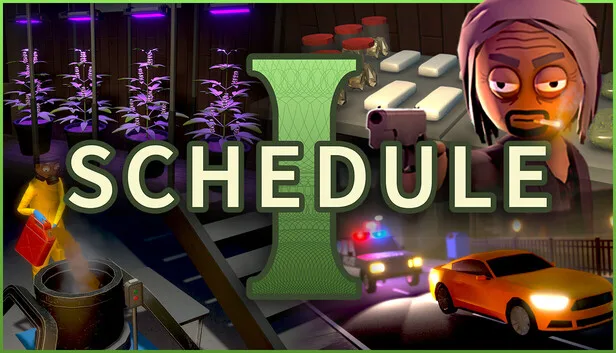
A Different Approach to Open World Gameplay
Schedule I offers a refreshing shift from traditional open world games. Rather than placing players in a role driven by missions and scripted events, it focuses on gradual progression and player driven choices. The world feels less like a playground for chaos and more like a system that reacts to how carefully or carelessly the player operates within it.
The experience is built around growth over time. Players begin with limited resources and must slowly expand their operations by making calculated decisions. This approach creates a sense of tension that is very different from action heavy games. Success is not instant, and mistakes can have lasting consequences.
Building an Empire from the Ground Up
At its core, Schedule I is about building and managing an underground network. Players are responsible for every step of the process, from production to distribution. This creates a layered gameplay experience where strategy becomes more important than speed.
Progression feels earned rather than given. Expanding operations requires planning, resource management, and a clear understanding of risks. As the player grows, so does the complexity of their responsibilities. Managing multiple aspects of the operation becomes a challenge that tests both patience and decision making.
This gradual expansion is one of the most engaging aspects of the game. It keeps players invested because every improvement feels meaningful.
Risk and Reward in Every Decision
One of the defining features of Schedule I is the constant balance between risk and reward. Every action has potential consequences, and players must decide how far they are willing to push their luck.
Taking bigger risks can lead to faster growth, but it also increases the chances of failure. Playing it safe may slow down progress, but it offers more stability. This dynamic creates a sense of tension that keeps players engaged throughout the experience.
Unlike many games where failure simply means restarting a mission, mistakes in Schedule I can affect long term progress. This makes every decision feel important and encourages players to think carefully before acting.
A Focus on Strategy Over Action
While many modern games rely heavily on fast reactions and combat mechanics, Schedule I leans more toward strategy and planning. The game rewards players who take the time to understand its systems and think ahead.
There is a strong emphasis on efficiency. Managing resources, optimizing processes, and avoiding unnecessary risks are all key to success. Players who approach the game with patience and attention to detail often find themselves progressing more steadily.
This slower pace may not appeal to everyone, but it offers a refreshing alternative for players who enjoy thoughtful gameplay.
Immersion Through Realism
Schedule I creates immersion not through flashy visuals or constant action, but through its realistic systems. The game world reacts to player behavior in ways that feel grounded and believable.
This realism adds depth to the experience. Players must consider factors such as timing, location, and consequences when making decisions. The result is a game that feels less like a scripted experience and more like a living system.
The attention to detail helps create a strong sense of involvement. Players are not just completing objectives, but actively shaping their own path within the game world.
The Appeal for Modern Gamers
Modern gamers often look for experiences that offer more than just quick entertainment. Schedule I appeals to players who enjoy long term progression and meaningful decision making.
The game provides a sense of control and ownership that is sometimes missing in more linear titles. Players are free to experiment, learn from their mistakes, and develop their own strategies.
This level of freedom makes the experience feel personal. No two playthroughs are exactly the same, and each player develops their own approach to success.
A Unique Place in the Gaming Landscape
Schedule I occupies a unique position in the gaming world. It combines elements of simulation, strategy, and open world design in a way that feels distinct from mainstream titles.
While it may not have the fast pace of action games, it offers something equally engaging in its own way. The focus on planning, risk management, and gradual growth creates a deeply satisfying experience for those willing to invest the time.
Final Thoughts
Schedule I is a game that rewards patience, strategy, and careful decision making. It challenges players to think beyond immediate results and focus on long term success. Every choice matters, and every action contributes to the larger picture.
For players looking for something different from traditional fast paced games, Schedule I offers a thoughtful and immersive experience. It proves that sometimes, the most engaging gameplay comes not from constant action, but from the quiet tension of building something over time while navigating the risks that come with it.