The Evolution of Keyboard Switch Technology
Mechanical keyboards have become increasingly popular among gamers, writers, and professionals who value precision and durability. For many years, traditional mechanical switches dominated the market. These switches offered a satisfying typing experience along with reliable performance that far surpassed the rubber dome keyboards commonly found in offices and homes.
As technology advanced, manufacturers began exploring new methods to detect key presses more accurately and provide greater customization. This experimentation eventually led to the development of magnetic switches, a technology that approaches keyboard input detection in a completely different way. While mechanical switches rely on physical contact to register a key press, magnetic switches detect movement through magnetic fields.
This difference may seem subtle, but it introduces several important advantages and changes how a keyboard behaves during both typing and gaming.
How Mechanical Switches Work
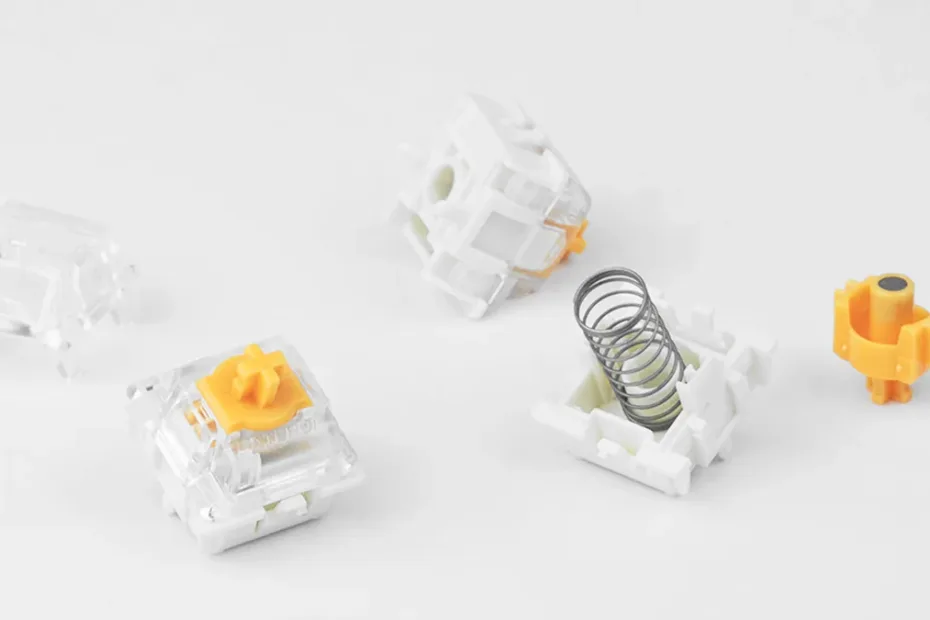
Traditional mechanical switches operate through a straightforward physical mechanism. Inside each switch is a spring loaded stem that moves downward when a key is pressed. When the stem reaches a certain point, metal contacts touch each other and complete an electrical circuit. This action sends a signal to the computer indicating that a key has been pressed.
The feel of the switch depends on the internal design. Linear switches move smoothly from top to bottom without noticeable resistance. Tactile switches provide a small bump during the press to signal actuation. Clicky switches add an audible sound along with the tactile bump, creating the distinctive clicking noise that many mechanical keyboard enthusiasts enjoy.
Because of this design, mechanical switches offer a consistent and satisfying typing experience. They are also known for their durability, often rated for tens of millions of key presses. For many users, this combination of reliability and tactile feedback is the main reason mechanical keyboards remain so popular.
How Magnetic Switches Detect Input
Magnetic switches take a different approach to registering key presses. Instead of relying on physical metal contacts, they use sensors that detect changes in a magnetic field. Inside the switch is a small magnet attached to the moving stem. As the key moves downward, the magnet changes its position relative to a sensor located beneath it.
The sensor measures this change in magnetic field strength and determines when the key has been pressed. Because the system relies on magnetic detection rather than physical contact, the switch can measure movement with extremely high precision.
This design allows the keyboard to detect exactly how far a key has been pressed rather than simply recognizing whether it has been pressed or not. As a result, magnetic switches can offer adjustable actuation points and more advanced input control.
Differences in Feel and Typing Experience
One of the most noticeable differences between mechanical and magnetic switches lies in the typing experience. Mechanical switches are known for their distinct physical feedback. The tactile bump or click provides confirmation that a key press has been registered, which many users find satisfying and reassuring.
Magnetic switches, on the other hand, often feel smoother and more fluid because there is no physical contact inside the switch that determines actuation. The key movement tends to feel consistent from top to bottom. Some users describe the experience as extremely smooth, while others miss the traditional tactile sensation that mechanical switches provide.
Because magnetic switches rely on sensors rather than fixed actuation points, some keyboards allow users to customize how deep a key must be pressed before it registers. This flexibility allows individuals to tailor the typing experience to their preferences.
Durability and Longevity
Durability is an important factor when comparing keyboard switches. Mechanical switches are already known for their long lifespan, often rated for fifty million or more key presses. This makes them far more durable than traditional membrane keyboards.
Magnetic switches can potentially offer even greater longevity because they do not rely on metal contacts touching each other. The absence of physical contact reduces wear over time and may help maintain consistent performance throughout the life of the keyboard.
Since the detection system is based on magnetic sensing rather than electrical contact, the switch mechanism experiences less mechanical stress during use.
Why Magnetic Switches Are Gaining Attention
Magnetic switches are attracting attention primarily because of the flexibility they provide. Since the keyboard can detect the precise position of each key, manufacturers can introduce features that are not possible with traditional mechanical switches.
Some keyboards allow users to adjust the actuation point so that keys register earlier or later depending on preference. For gamers, this can create faster response times during competitive play. Certain designs also allow rapid reset behavior, meaning a key can be pressed repeatedly with minimal movement, which can be beneficial in fast paced games.
These features are particularly appealing to competitive gamers who want maximum control over their input devices.
Choosing Between Magnetic and Mechanical Switches
Despite the innovations introduced by magnetic switches, traditional mechanical switches continue to hold a strong place in the keyboard community. Many users appreciate the familiar tactile feedback and proven reliability of mechanical designs. Writers and professionals who spend long hours typing often prefer the consistent feel of mechanical switches.
Magnetic switches appeal to users who value customization and advanced performance features. Gamers who want adjustable actuation points or faster response behavior may find this technology especially appealing.
Ultimately, the choice between magnetic and mechanical switches comes down to personal preference and how the keyboard will be used.
The Future of Keyboard Switch Innovation
Keyboard technology continues to evolve as manufacturers experiment with new switch designs and input detection methods. Magnetic switches represent one step in this ongoing innovation, offering a glimpse of how keyboards might become more customizable and responsive in the future.
At the same time, mechanical switches remain a trusted standard that continues to improve through new materials, refined engineering, and creative switch variations.
For users exploring the world of mechanical keyboards, understanding the difference between these technologies can make it easier to choose the right keyboard. Whether someone prefers the classic feel of mechanical switches or the advanced capabilities of magnetic designs, modern keyboards now offer more choice and flexibility than ever before.